Darkroom fanzineNo. 01 · November 202614 guides · free
The Laboratory
Hands-on guides to developing, reversal and other chemical adventures. Factory times, linked sources and zero filler.
First steps
Develop your first black-and-white roll
Scene by scene, with Ilford's recipe: what to pour, how many inversions and when to drain.
First steps
From cartridge to drying clip. The bare minimum to develop your first roll without scares.
2 guides
First steps
How black-and-white developing works
What happens inside the tank, the factory times that matter and each brand's agitation rhythm.
“If you can see your hand in the dark, it isn’t dark.”
— Scene 1, The Dark Room
Chemistry
Reversal, colour, pushing and the times archive. Here we measure in tenths of a degree.
5 guides
Chemistry
Develop colour slides (E-6) at home
Colour slides at home. Nine baths at 38 °C and a first developer that forgives nothing.
Chemistry
Make black-and-white slides with Fomapan R 100
Black-and-white slides: develop a negative, destroy it and keep the positive. Twelve baths.
Chemistry
Shoot at a higher ISO and compensate in development
What you gain, what you lose and the factory times for each EI.
EI 1600
Chemistry
Rescue an under- or overexposed roll
Latitude, push, pull and the clip test for the roll you don't trust.
Chemistry
Developing times chart: Ilford, Kodak and Foma
Every factory developing time in one chart, with columns calculated for 18–24 °C.
| HP5 Plus · DD-X 1+4 | 20 °C |
|---|---|
| EI 400 | 9:00 |
| EI 800 | 10:00 |
| EI 1600 | 13:00 |
| EI 3200 | 20:00 |
Case files
When things go wrong outside the tank: old film, unmarked cans and labs that lose things.
3 guides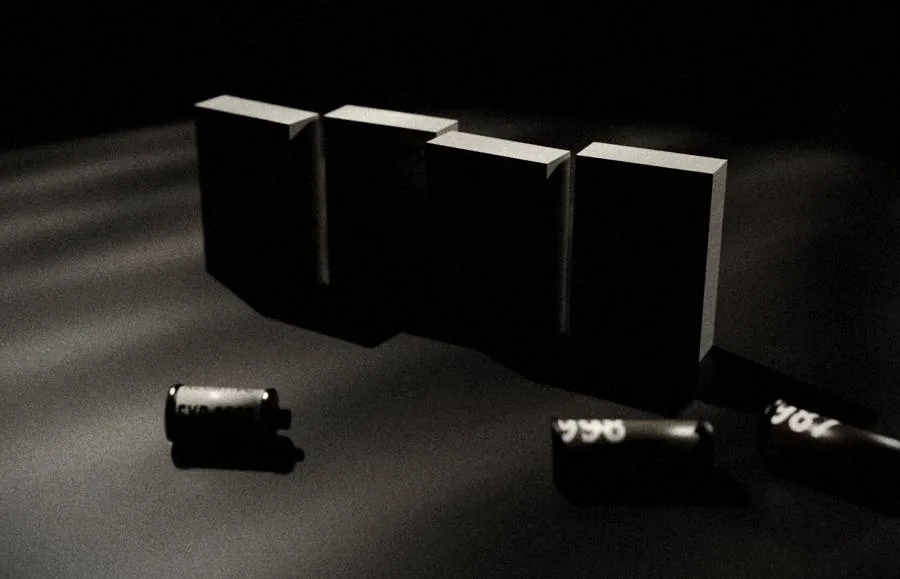
Case files
Shoot expired film without losing the roll
Old film as evidence: what heat does, how to thaw without condensation and a test roll.
Case files
What to do if the lab loses your roll
Liability usually ends at a fresh roll. Inventory, photos and a written claim.
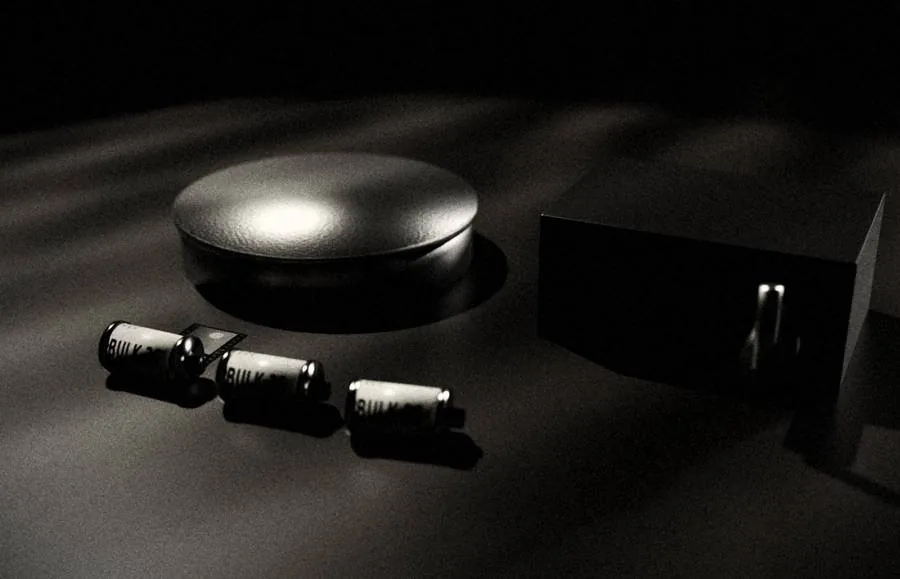
Case files
Load your own rolls from a 30 m can
How many rolls you get, loading step by step and why an unmarked can must be identified before the lab.
Formats
Half frame, 120 and 220, backs and sheets. Every format has its own way of going wrong.
4 guides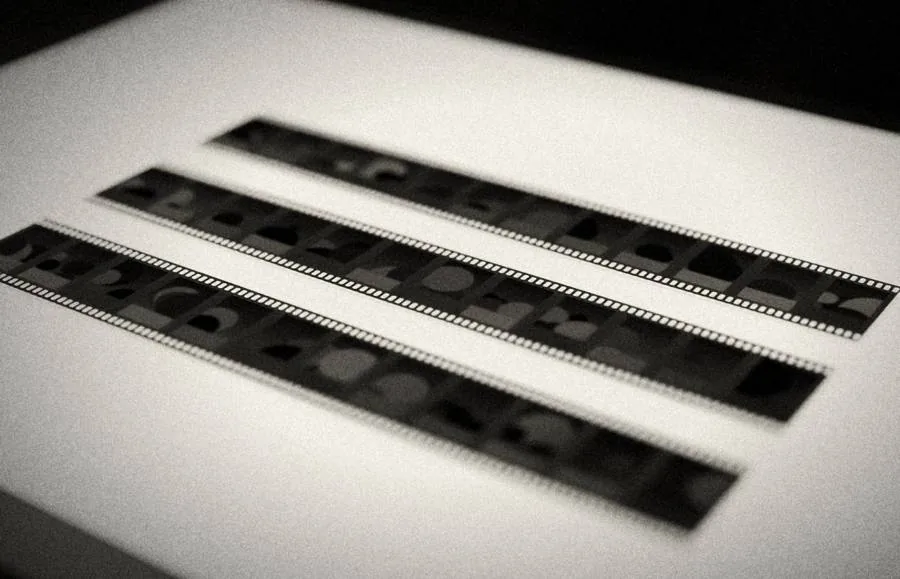
Formats
Shoot 72 frames per roll with half frame
18 × 24 mm, always vertical, and the note that stops the scanner cutting them in half.
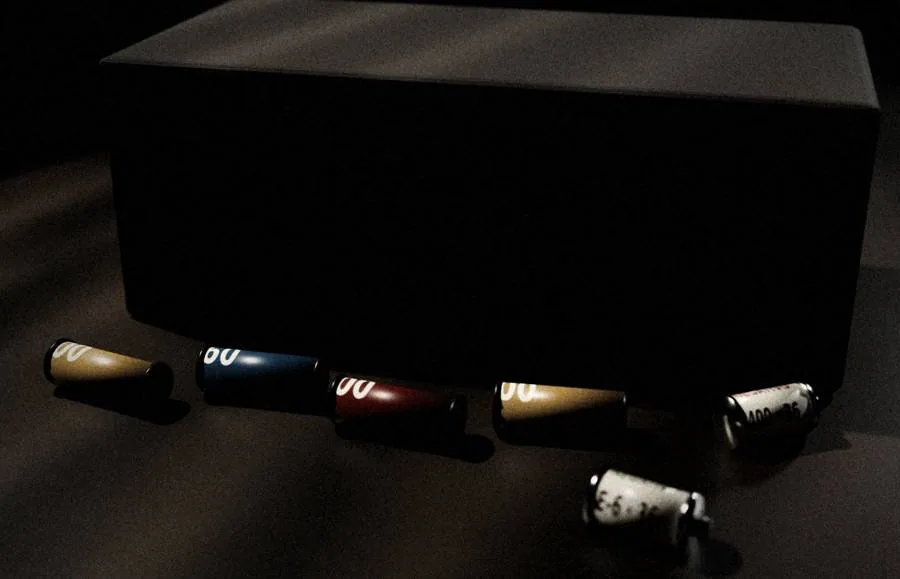
Formats
Travel with 35mm, 120 and 220 film
135, 120 and 220 on the road: frames per roll, loading and unloading, and airport security.
Formats
Use several backs without mixing up rolls
Interchangeable backs without confusion: markers, darkslide and one log per back.
A · B · C
Formats
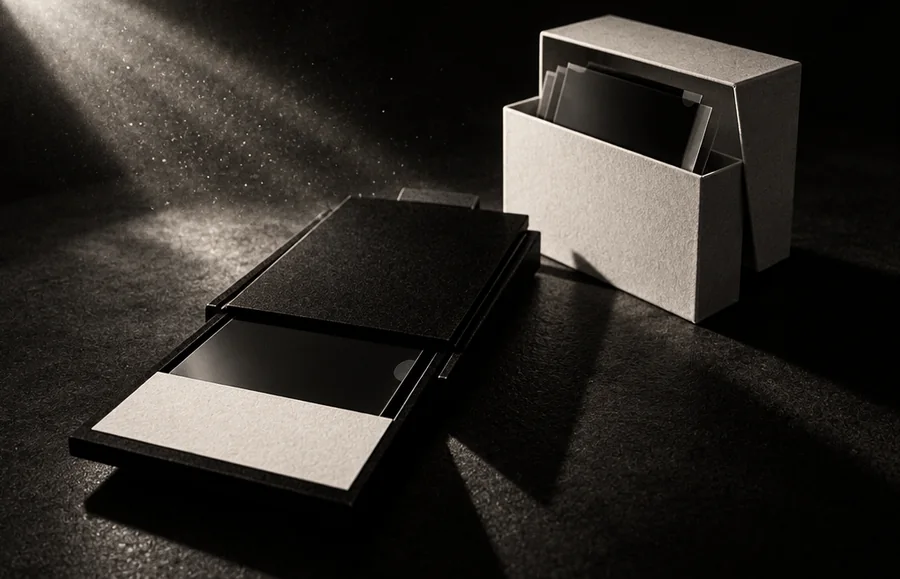
Load and expose sheet film (large format)
Large format sheet by sheet: the notch in the dark, loading holders and never losing a side.